
Last Day Trip
Building a Full-Stack Travel Platform for Bangladesh
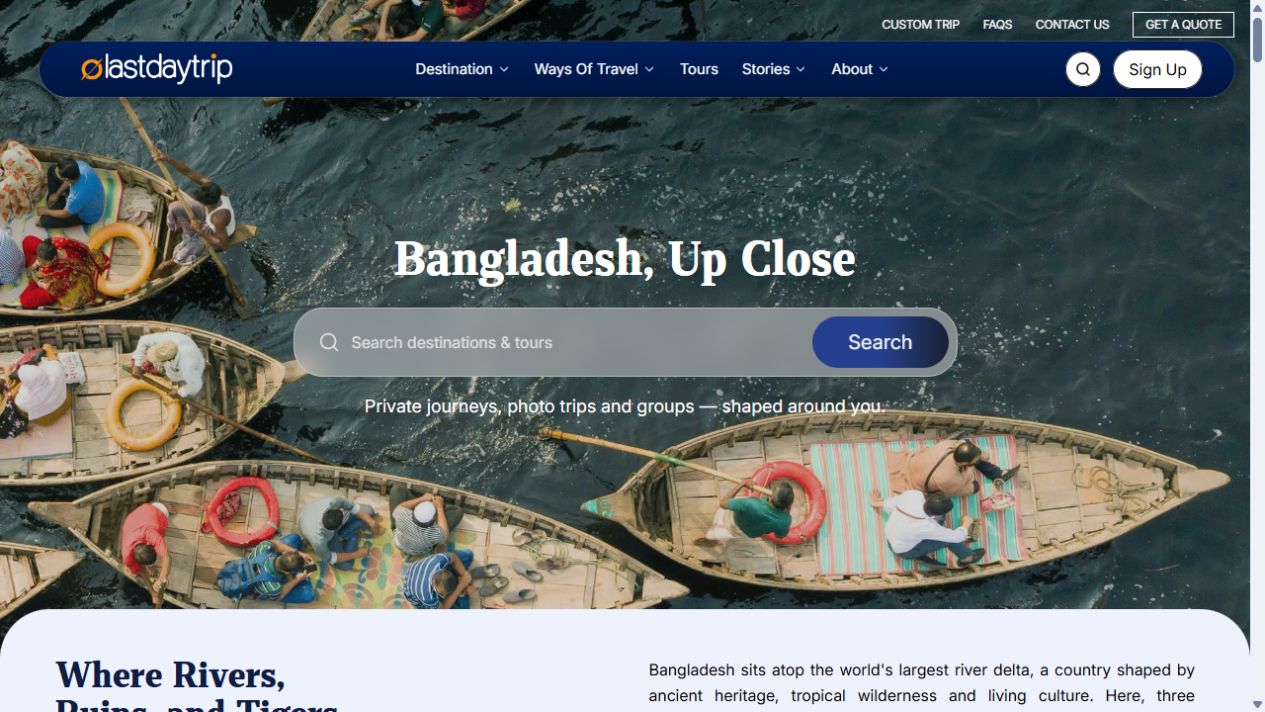
Last Day Trip is a travel platform that helps visitors explore Bangladesh’s destinations, discover tours and activities, and submit booking enquiries.
My work covered the public-facing website, backend workflows, administrative tools, and production deployment.
- Role
- Full-Stack Developer
- Stack
- Next.js, React, TypeScript, Node.js, MongoDB, Redis, TanStack Query
The Challenge
The platform needed to bring destinations, tours, activities, travel stories, and booking information into one consistent experience.
Beyond the public website, the team needed tools to manage content and enquiries, with access restricted according to staff responsibilities. The implementation also had to accommodate evolving client requirements without disrupting existing workflows.
My Approach
Making travel discovery easier
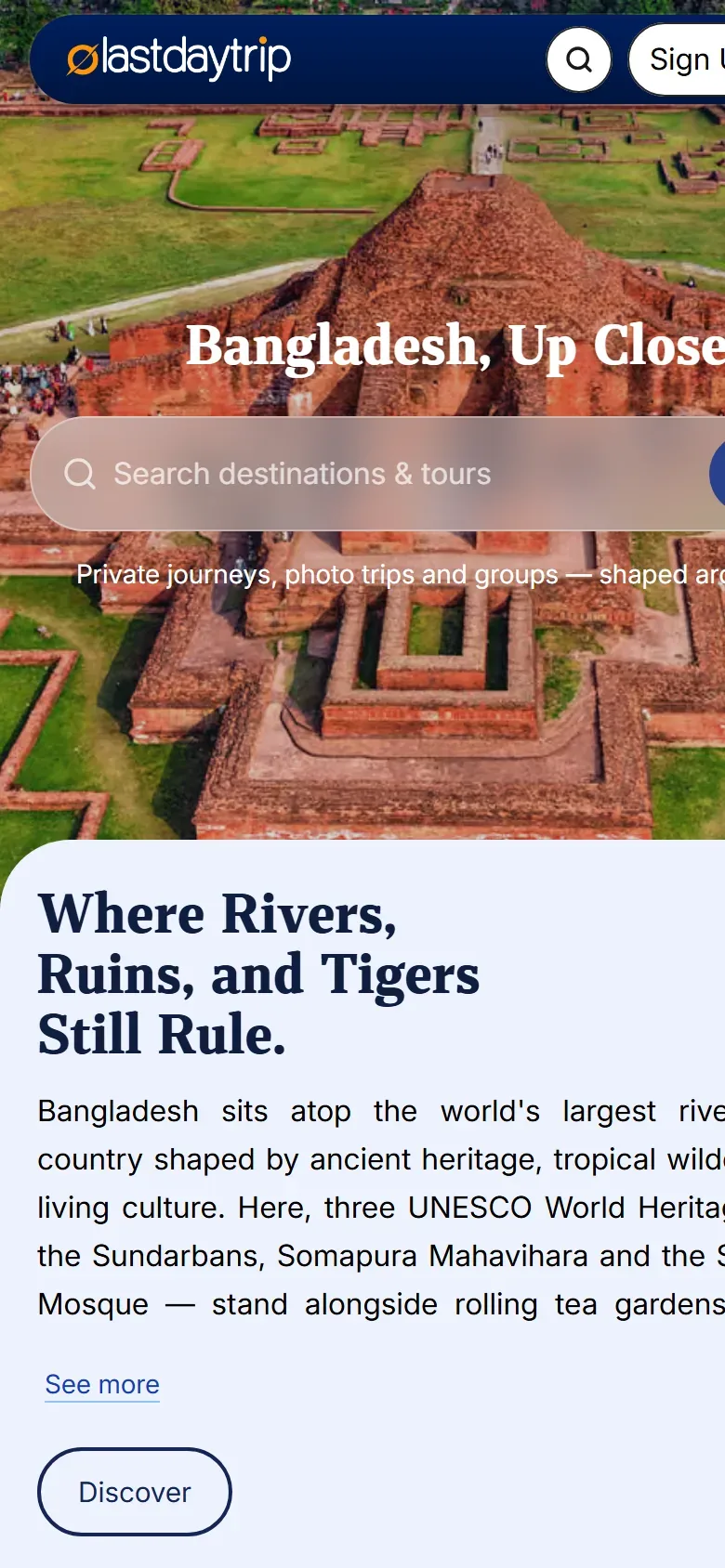
I developed responsive interfaces for browsing destinations, tours, activities, and stories. Search was expanded to include destinations and regions, while map-based discovery gave visitors another way to explore Bangladesh.
Client feedback guided improvements to mobile layouts, navigation menus, content alignment, and clickable links within editorial content.
Connecting the interface to backend workflows
I worked on APIs and MongoDB integration for travel content, booking requests, and enquiries. This included supporting configurable pricing data and preserving the client-approved pricing behaviour during subsequent changes.
Shared validation and backend utilities helped keep data handling consistent across related features.
Establishing role-based administration
I implemented role and permission definitions, authorization checks, and record-level access rules.
These distinguish between company-wide access, assigned bookings, consultant-owned records, and agency-specific data. The backend also includes access-management models, audit logging, and protected passport-data handling.
The broader role-specific dashboard system remains an ongoing area of development.
Improving performance and search visibility
Performance work included responsive image sizing, image-loading priorities, database indexes, pagination, and caching support.
SEO work covered page metadata, canonical URLs, sitemap configuration, and structured data on tour pages. Google Search Console screenshots confirmed successful sitemap processing and homepage indexing—without treating indexing as a guarantee of search ranking.
Strengthening maintainability
I began a staged TypeScript migration while preserving existing UI and business rules. All 21 database model implementations were migrated, followed by selected routes, components, controllers, and authorization modules.
Regression tests and production builds were used to verify each completed batch.
A closer look
Outcome
The project brought public travel discovery and operational workflows into a single full-stack application, with a stronger foundation for access control, maintainability, and continued development.
At the latest verified milestone:
- 21 database models had TypeScript implementations.
- 220 automated tests passed.
- The production build completed successfully.
The full TypeScript migration is still in progress. Performance and SEO improvements are documented as implementation work, not unsupported claims about traffic, conversions, or ranking gains.
Key Takeaway
A travel platform needs more than attractive pages. The public experience, content management, booking workflows, and access controls must work together—and remain maintainable as the business grows.